The Honest Truth About Time Management as a Parent
You don't need another lecture about time blocking or waking up at 5 a.m. If you're here, you already know the problem: there aren't enough hours, the to-do list never ends, and somebody always needs something right now.
Here's what actually helps. Not theory, not hustle culture
disguised as parenting advice. Just the stuff that's worked for real families juggling school, sports, work, and whatever today's surprise is.
1. Stop Managing Time You Don't Have
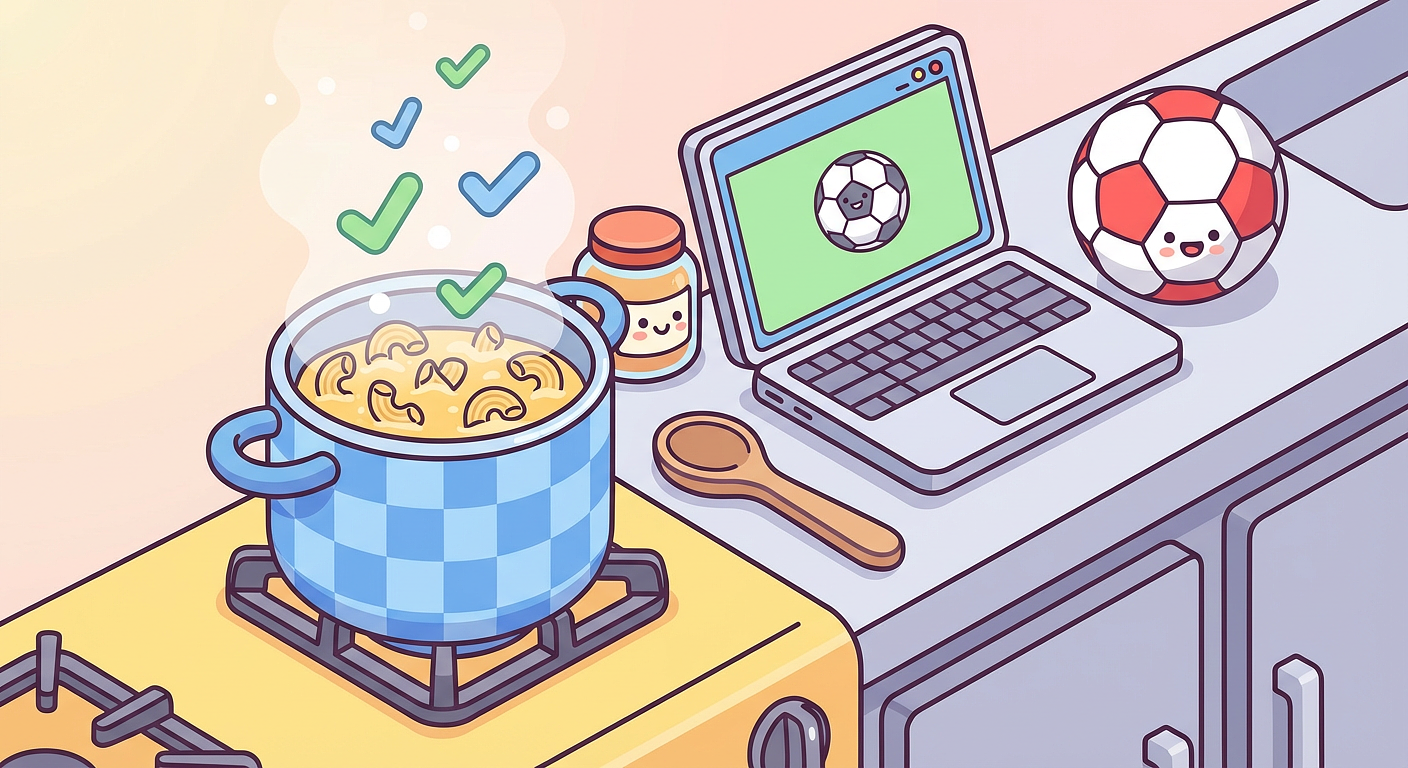
Most time management advice assumes you have big open blocks to optimize. Parents don't. You have 7 minutes while the pasta boils, 12 minutes in the pickup line, and maybe 40 minutes after bedtime before you're unconscious on the couch.
What actually works: Accept the fragments. Use them intentionally instead of fighting them. The pickup line is for answering quick texts. The pasta window is for signing a permission slip. Bedtime is for the one thing that needs real focus.
Stop trying to find more time.
You won't. Get better at using the scraps you've got.
2. Build a Single Family Command Center
The number one reason parents feel behind is information scattered everywhere: school emails in your inbox, game schedules texted from the coach, a flyer crumpled in your kid's backpack, a Google Doc shared by the room parent.
Pick one place where everything lives. For most families, a shared digital calendar works best because everyone can see it from their phone.
The rules:
- If it has a date, it goes on the calendar immediately
- If it's a to-do, it goes in one shared list (Apple Reminders, Google Tasks, a whiteboard on the fridge -- pick one)
- If it's informational, it can die in your inbox guilt-free
The hard part isn't the system. It's the discipline to put things in the system instead of thinking I'll remember that.
You won't. None of us do.
3. Batch Your Email Into Two Windows
Email is the biggest time thief for parents. Not because you get so many (though you do), but because each one interrupts whatever you were doing and takes 2 to 5 minutes of context-switching to recover from.
The fix: Check email twice a day. Once in the morning, once in the evening. That's it. Turn off notifications between those windows.
But what if I miss something urgent from school?
Here's the thing: in 10 years of parenting, how many school emails were actually can't-wait-two-hours urgent? Almost none. The URGENT
in the subject line usually means we need this by Friday.
If you want an even faster approach, forward your school emails to a digest tool that reads them all and sends you one clean summary. You go from scanning 20 emails to reading one in 90 seconds.
4. Use the One Touch
Rule for Paper and Forms
Every piece of paper that comes home from school should be handled once:
- Sign it now and put it in the backpack
- Add the date to the calendar and recycle the paper
- Trash it if it's purely informational
Never put a form on the counter to deal with later.
The counter is where forms go to die. You'll find it in April, three months after the deadline.
Same goes for digital forms. If a school email asks you to fill something out, do it in the moment or add a 5-minute task to your to-do list with a due date.
5. Prep the Night Before (the Non-Obvious Version)
Everyone says prep the night before
and pictures packing lunches and laying out clothes. That's fine. But the real time saver is prepping decisions, not stuff.
Before bed, answer these three questions:
1. What's the one thing that absolutely must happen tomorrow?
2. Is there anything unusual about tomorrow's schedule?
3. What's for dinner tomorrow night?
That's it. Those three answers eliminate the three biggest morning panic spirals. You won't stand in front of the fridge at 5 p.m. wondering what to cook. You won't discover at 7:45 a.m. that it's Twin Day at school.
6. Say No to 30% of Activities
This is the one nobody wants to hear. Your kid doesn't need to be in soccer, piano, coding camp, art class, and competitive swimming simultaneously. They really don't.
Every activity you add isn't just the activity time. It's:
- Drive time (both ways)
- Gear prep and cleanup
- Email and text threads with other parents
- Schedule conflicts with your other kids
- Weekend tournaments that eat entire Saturdays
Pick the two or three things your kid actually loves. Drop the rest, at least for this season. You can always add back later. You can't get back the family dinners you missed sitting in a parking lot.
7. Automate the Repetitive Stuff
Parents repeat the same tasks every week: grocery shopping, meal planning, school email triage, activity scheduling, permission slips. Every one of these can be at least partially automated.
Groceries: Use a recurring online order. Most stores let you save a favorites
list and reorder with one click. Modify weekly, don't rebuild from scratch.
Meals: Pick 10 dinners your family actually eats. Rotate them on a two-week cycle. Planning 14 unique meals every two weeks is a recipe for decision fatigue and pizza delivery.
School emails: Use a digest service that summarizes everything into one daily email. Events get pulled to your calendar automatically. You go from 15 minutes of email scanning to 2 minutes of digest reading.
Permission slips and forms: Most schools have moved to digital forms. Bookmark the parent portal and knock out forms the second they arrive.
8. Protect One Off
Block Per Week
This isn't about self-care (though it helps). It's about preventing burnout that makes you less effective the rest of the week.
Block one 2-hour window per week where you do not parent, work, clean, or handle logistics. Guard it like a doctor's appointment. What you do in that window doesn't matter -- nap, read, sit in a coffee shop doing nothing. The point is the boundary.
Parents who protect a weekly off block consistently report being more patient, more organized, and less resentful the other 166 hours of the week. Funny how that works.
9. Sync Up With Your Co-Parent (or Support System)
Half of parenting time stress comes from coordination failures. I thought you were picking them up.
Did you see the email about early release?
Wait, practice is at the other field?
The 5-minute daily sync: Every evening, one of you reads through the next day's calendar out loud. The other confirms or flags conflicts. Takes 5 minutes. Prevents the 45-minute scramble when something falls through the cracks.
If you're a single parent, this sync can happen with a grandparent, a neighbor, or even just yourself and a checklist. The point is deliberately looking ahead instead of reacting.
Bonus: if you're using a shared email digest for school communications, both parents automatically see the same information without forwarding emails back and forth.
10. Lower the Bar on Good Enough
The final hack isn't a hack at all. It's a mindset shift.
Good enough lunches are fine. Good enough birthday parties are fine. Forgetting one spirit day out of twelve is fine. Your kid will not remember whether their lunchbox had a handwritten note every day. They'll remember whether you were present and not stressed out of your mind.
The parents who seem like they have it together
aren't doing more than you. They've just gotten comfortable doing less, imperfectly, without guilt.
You're not failing. You're parenting in an era that expects more from parents than any generation before. Cut yourself some slack and focus on the systems, not the superhero act.
Start With One Thing
Don't try all 10 at once. Pick the one that made you think yeah, I need that.
Do it for a week. Then add another.
Most parents find that batching email (#3) and automating the repetitive stuff (#7) give the biggest immediate payoff. If school emails are your biggest time sink, setting up a daily digest takes 2 minutes and saves you 15 minutes every single day.
Small changes, compounded over a school year, are how you get hours back. Not one magic productivity system -- just fewer things falling through the cracks.