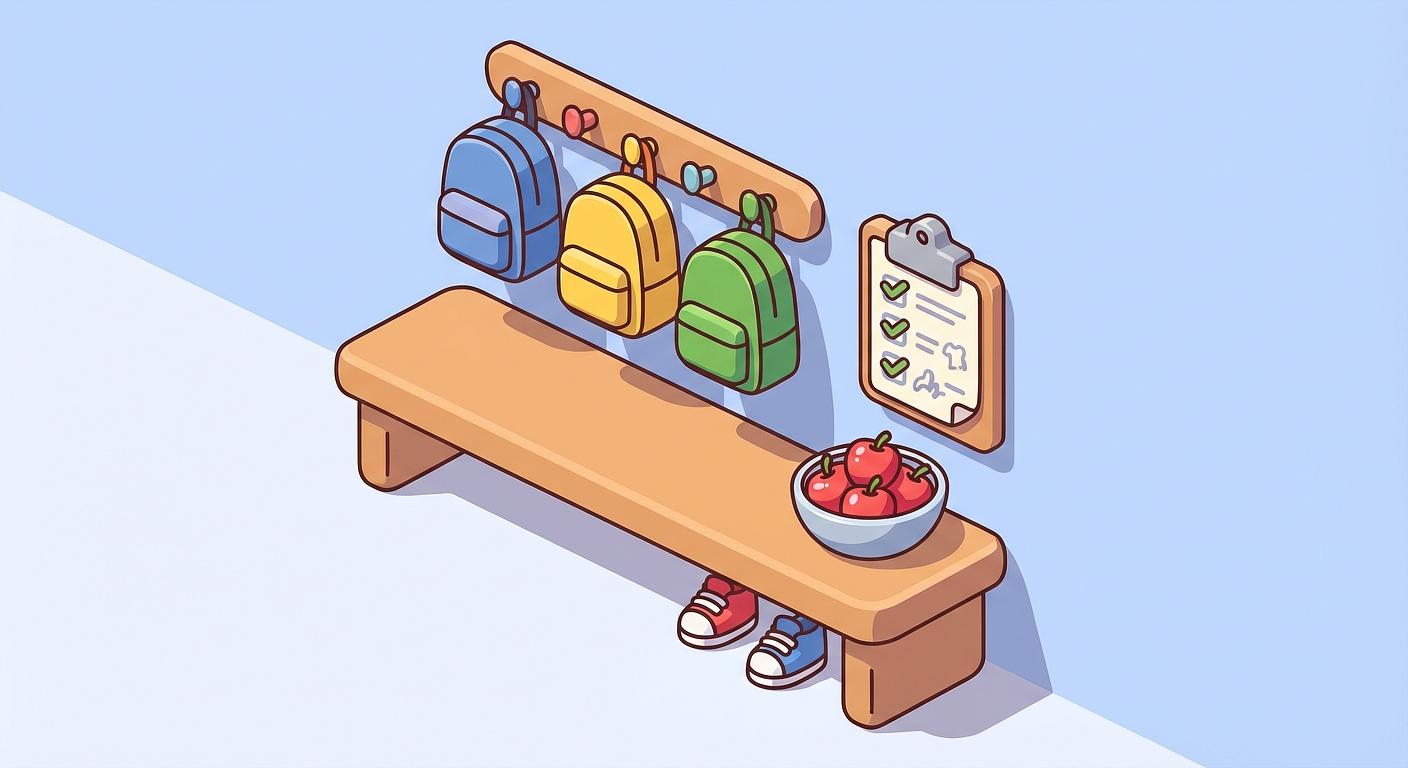
What a Good After School Routine Looks Like
A good after school routine is a fixed order of the same few steps: decompress, snack, homework or reading, free time or activities, then dinner and bedtime. The order matters more than the clock. Add a short evening check of tomorrow's school plans, and the next morning gets easier too.
You don't need a color-coded binder or an elaborate chore chart. You need a simple, repeatable structure your kids can follow without you narrating every step. This guide covers the afternoon, the evening, and the school morning, since all three depend on each other.
Why Routines Help Kids and Parents
After a full day of following someone else's schedule, kids do better when home has clear expectations. Without them, every afternoon turns into a negotiation.
A consistent routine helps with:
- Homework. Kids know when and where it happens.
- Fewer power struggles.
What's next
is already decided. - Bedtime. When the afternoon flows, the evening does too.
- Your own head space. You stop making a dozen small decisions every day.
It doesn't have to be rigid. A general flow from the moment they walk in to lights out gives everyone an anchor.
The After School Routine, Step by Step
1. Arrive and decompress (15 to 30 minutes)
Kids need a few minutes to shift from school mode to home mode. Some want to talk right away. Others need quiet or need to run around first.
Hold off on do you have homework?
the second they walk in. Give them a buffer. Have one fixed spot for backpacks, shoes, and lunchboxes so the unpacking happens on autopilot.
2. Snack
Hungry kids can't focus, and what can I eat?
on repeat wears everyone down.
- Set the snack out before they get home when you can.
- Rotate three or four options so you aren't deciding daily.
- Make it filling: apple slices with peanut butter, cheese and crackers, yogurt with granola, a banana and a handful of nuts.
3. Homework and reading (20 to 60 minutes, by age)
Too early and they haven't decompressed. Too late and they're wiped out. For most families, right after the snack works.
- Same time, same place every day.
- Screens off and the table cleared.
- Nearby, not hovering. Be available for questions without sitting next to them.
- A timer helps younger kids pace themselves.
No homework today? Use the block for reading. Keeping it consistent means nobody argues about whether it's a homework day.
4. Free time and activities
Kids need unstructured time once the work is done. This is also when practices, lessons, and tutoring usually happen.
If the schedule changes by day, post it somewhere visible: a whiteboard on the fridge or a printed weekly grid. Better yet, keep it in one shared family calendar that every adult can see on their phone.
Mid-afternoon is also when schedule changes tend to arrive: practice moved to the other field, rehearsal running late, early dismissal tomorrow. If you're coordinating more than one team, our post on sports team email chaos has ideas for keeping it straight.
5. Dinner, wind-down, and bedtime
The end of the day should slow down gradually. If you allow screens, right after dinner works well, so there's a buffer before bed.
- Dinner
- Cleanup, with kids helping (even one small task counts)
- Wind-down: reading, drawing, quiet play
- Bedtime routine: bath, teeth, story, lights out
The 5-Minute Evening Check That Fixes Tomorrow Morning
Most rough school mornings start the night before. The poster board nobody mentioned, the spirit day you forgot, the form that was due today.
After the kids are in bed, take five minutes to look at tomorrow:
- Anything unusual at school? Field trip, picture day, early release, a special lunch, dress-up day.
- Anything they need to bring? Signed forms, library books, instrument, gym clothes, money for a fundraiser.
- Any activity changes? Practice times, locations, who's driving.
- What's for dinner tomorrow? Answering this now saves the 5 p.m. scramble.
The hard part is that the answers are scattered across a dozen emails from teachers, the front office, the PTA, and coaches. This is the job EmailSnapshot was built for. You forward school and activity emails (or set up an auto-forwarding rule) to your snapshot's private address, and it sends you one short digest at the time you choose with the dates, deadlines, required items, and schedule changes pulled out. An evening digest turns this check into a two-minute read, and you can share it with a co-parent or sitter so everyone sees the same plan.
If you'd rather handle it manually, our guide to managing school emails covers labels, filters, and a reading schedule that works.
The School Morning Routine
Mornings go well when most of the thinking already happened the evening before. Here's the morning half of the school day.
Prep the night before
- Clothes picked out before bed. This ends the morning wardrobe standoff.
- Backpack packed and by the door, with homework, signed forms, and library books zipped inside.
- Lunch packed or at least decided. Even cutting the vegetables ahead of time helps.
- Tomorrow checked using the evening check above.
Use a short, visual checklist
Write the steps on a whiteboard or print them and stick them on the fridge. Keep them in order:
- Wake up and get dressed
- Eat breakfast
- Brush teeth and wash face
- Shoes on
- Grab backpack and lunch
- Out the door
For pre-readers, use pictures. Older kids may keep the list on a phone, or not need it at all after the first few weeks of school.
Set time anchors
Instead of saying hurry up
every three minutes, tie each step to a time and post it next to the checklist. For example:
- 6:45 wake up
- 7:00 dressed and downstairs
- 7:15 breakfast done
- 7:25 teeth brushed, shoes on
- 7:30 out the door
A clock kids can see from the kitchen table lets the clock be the authority instead of you.
Keep breakfast boring
Save pancakes for Saturday. Offer two or three fast options: overnight oats, toast with peanut butter and banana, yogurt and granola, hard-boiled eggs made on Sunday, or pre-bagged smoothie ingredients. If your kid eats slowly, start breakfast earlier rather than cutting it short.
Make screens the last step
Screens during breakfast slow everything down. If screens are part of your mornings, make them the reward for being ready early: dressed, fed, and packed by 7:15 means ten minutes of a show.
Have a Plan B
Someone will sleep through the alarm. Keep a grab-and-go breakfast on hand (granola bars, fruit pouches) and a small stash of supplies at home: pencils, glue sticks, a folder, a sheet of poster board. If you missed a school message in the rush, read it after drop-off instead of trying to catch up in the car line.
Routine Ideas by Age
Elementary (K to 5)
- Backpack in its spot, lunchbox on the counter
- Snack at the kitchen table
- Homework or reading for 20 to 30 minutes
- Free play or activity
- One small chore (set the table, feed the pet)
- Picture checklist for mornings, with plenty of buffer time
Middle school (6 to 8)
- Unpack bag and check planner
- Snack
- Homework block of 45 to 60 minutes
- Activity or free time
- A real chore (load the dishwasher, take out trash)
- Screen time window, if allowed
- Packs their own bag at night; uses an alarm clock in the morning
High school (9 to 12)
- Decompress and grab their own snack
- Homework and study time, which may stretch into the evening
- Activity, job, or social time
- A household contribution
- Runs their own evening and morning routine, and checks their own school portal and email
The older the kid, the more they own. Your job shifts from directing to checking in.
Making the Routine Stick
The first two weeks are the hardest. After that, it mostly runs itself.
- Start with three or four anchors. Snack, homework, dinner, bedtime. Add more later.
- Keep the order, flex the times. If Tuesday practice pushes homework to 5 p.m., that's fine as long as it still happens.
- Let kids choose small things. Kitchen table or desk? Which snack from the list? Choice builds buy-in.
- Post it where everyone can see it.
- Expect pushback. Stay calm and consistent, and it will click.
When the Routine Breaks Down
Snow days, sick days, holidays, and school breaks all knock things off track. Get back to the basics as soon as you can instead of rebuilding the whole system.
If something keeps failing, change one piece at a time. Maybe homework needs to move 30 minutes later, or the snack needs to be bigger, or the backpack spot needs to be closer to the door. Small adjustments beat starting over. The start of a new school year is a good time for a reset, and our back-to-school organization tips cover the bigger setup.
The Short Version
Snack, homework, play, dinner, bed. Prep the night before, use a short morning checklist, and spend five minutes each evening on what's coming tomorrow. That evening check is the piece that holds the rest together, because it's where the school newsletters, teacher reminders, and practice changes turn into a plan.
If gathering that information from your inbox is the part that keeps slipping, try EmailSnapshot free for 7 days. No credit card needed, and you choose exactly which emails it reads. And if the whole load feels like too much right now, our guide for overwhelmed parents is a good next read.